


Our new air barrier system is here!

AtmoSeal VP is a single-component, vapor-permeable, silyl-terminated polyether (STPE), fluid-applied air barrier membrane. Spray or roller-applied, AtmoSeal VP prevents penetration of unwanted water and air through the building envelope while permitting outward drying of the wall
assembly.
AtmoSeal VP bonds to most common building materials without priming, including damp substrates to form a seamless, flexible membrane. Environmentally adaptable, AtmoSeal VP can be applied in wet weather and be left exposed to UV up to 12 months.

AtmoFlash VP is a single-component, vapor- permeable, silyl-terminated polyether (STPE) sealant intended for use as a gunnable flashing and detailing compound or air barrier applications.
A component to the AtmoSeal VP permeable air barrier system, AtmoFlash VP prevents
penetration of unwanted water and air at rough openings, joints, seams, fastener heads, penetrations, and transitions while permitting outward drying of the wall assembly.
AtmoFlash VP bonds to most common building materials without priming, including damp substrates, to form a seamless, flexible membrane. Environmentally adaptable, AtmoFlash VP can be applied in wet weather and be left exposed to UV for up to 12 months.
Why is EPRO’s AtmoSeal VP air barrier different?
AtmoSeal VP has proven STP chemistry and among the highest perm rating in its class, exceeding 20 perms at 20 mil thickness. This allows the wall assembly to dry, limiting the potential for trapped
moisture.
It has a solid, tough cured film that bonds to damp substrates without primer and is compatible with the full EPRO below-grade waterproofing portfolio for a ground-to-roof warrantable building envelope.
AtmoSeal VP also has an 18-month shelf life and is solvent and isocynate-free.
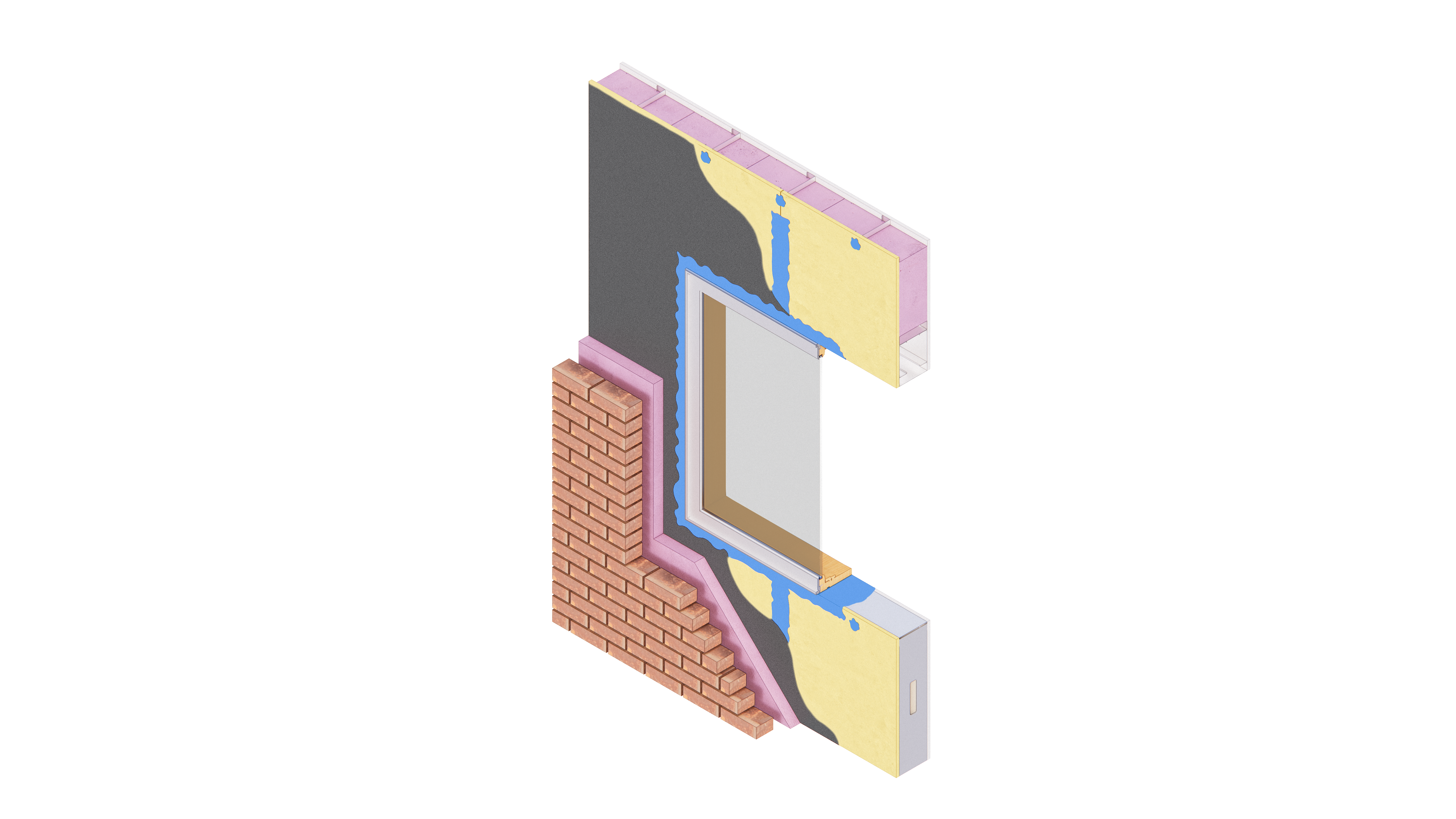
What makes air barrier systems essential for building protection?
Air barriers are continuous and durable systems designed to control the flow of air in and out of a building. Essentially, they wrap around the structure to prevent air leaking out or seeping in, which helps maintain a steady temperature inside: Air barriers create a seal across the building envelope.
Air barriers also help prevent wind-driven moisture intrusion, protect interior wall assemblies from condensation damage, and enable energy efficiency. To be effective, an air barrier system must be continuous, structurally supported, air-impermeable, and durable, offering continuous protection.
Flashings are used to prevent water from seeping into structures at joints or around features like chimneys, vents, and windows. This element helps protect against leaks and water damage, making buildings more durable.
Flashings are a vital component of an air barrier system.
Together, a properly detailed air barrier system and integrated flashing create a tight, continuous building envelope that supports a building’s energy efficiency and longevity.
We're here to answer all your AtmoSeal VP questions and determine if this system is ideal for your next project - email us, and let's talk!